 Save to Pinterest
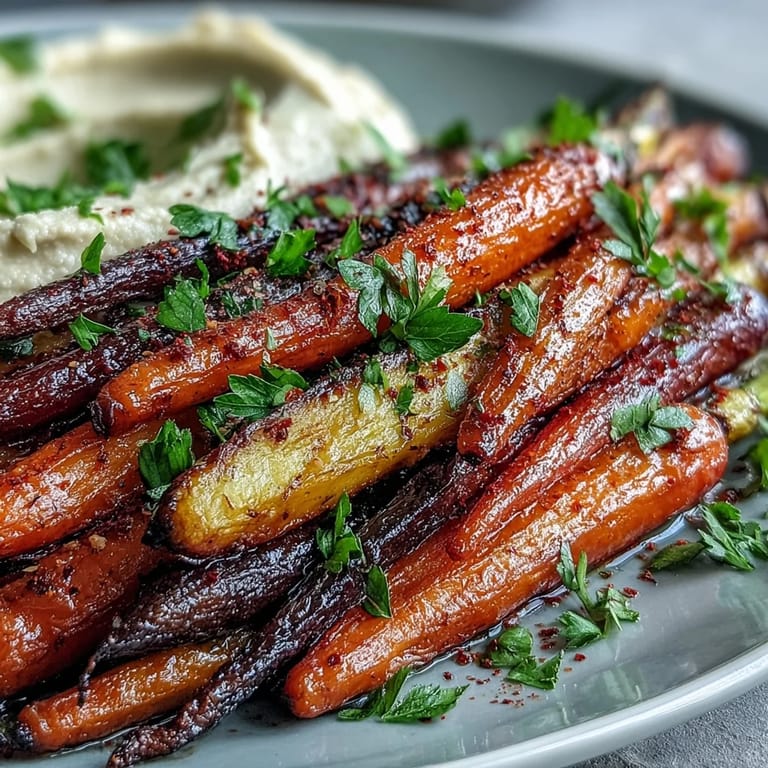
 My friend showed up with a farmers market haul last spring, dumping a bunch of purple, orange, and yellow carrots onto my counter like treasure. She insisted we roast them together, and I'll admit I was skeptical—carrots seemed too simple, too everyday. But watching them caramelize in the oven, their natural sugars concentrating into something almost jammy, changed my mind completely. That day taught me that the best dishes don't need to be complicated, just intentional.
I made this spread for a potluck where I knew half the guests were trying different diets, and instead of making three separate dishes, I brought this one platter. Watching everyone—the pescatarian, the vegan, my picky cousin—all reach for the same bowl of hummus was oddly satisfying. It became the thing people talked about for weeks after, which proved that food doesn't need dietary restrictions to unite people.
Ingredients
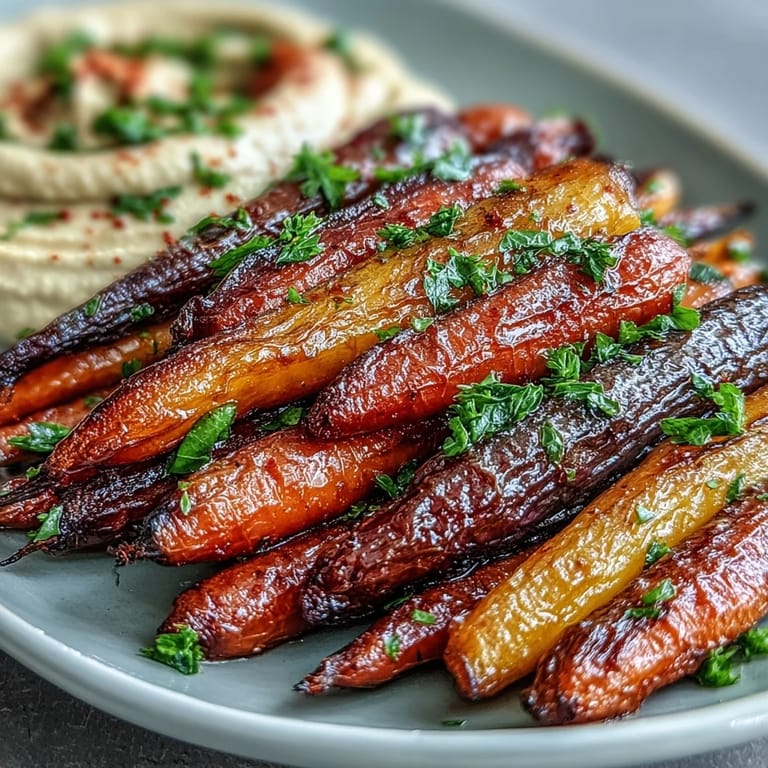
- Rainbow carrots (1 lb): Look for a mix of colors at the farmers market or specialty section—they taste almost identical to orange carrots but the visual payoff makes them worth seeking out, plus they photograph beautifully.
- Olive oil (2 tbsp for carrots, 2 tbsp for hummus): Use your everyday olive oil for roasting, but save a really good extra-virgin one for drizzling on the hummus at the end where you'll actually taste it.
- Sea salt and black pepper: These seem basic, but seasoning the carrots before roasting lets the salt draw out moisture and caramelize the exterior, which is different from salting after.
- Ground cumin (1/2 tsp optional, plus 1/2 tsp for hummus): The cumin adds a warm, earthy note that makes both components taste more intentional, though you can skip it if you prefer a cleaner flavor.
- Fresh parsley (1 tbsp): This is purely for garnish, but the bright green against the roasted colors is what makes people say wow before they even taste it.
- Chickpeas (15 oz can): Drain and rinse them really well—this removes the starchy liquid that can make hummus gummy instead of silky.
- Tahini (1/4 cup): This is the soul of the hummus; buy it from somewhere with good turnover because old tahini can taste bitter and separated.
- Lemon juice (2 tbsp fresh): Bottled lemon juice gets the job done, but fresh squeezed makes the hummus taste lighter and brighter, especially when it's this simple.
- Garlic (1 clove minced): One clove is plenty because it'll dominate the hummus if you overdo it—you want to taste the tahini and lemon more than the garlic.
- Cold water (2–3 tbsp): Add this gradually because tahini hummus can thicken as it sits, and you'd rather adjust consistency while blending than end up with soup.
- Smoked paprika (1/4 tsp): This is optional but worth the small jar investment—it adds a whisper of smokiness and color that makes the hummus look restaurant-quality.
Tired of Takeout? 🥡
Get 10 meals you can make faster than delivery arrives. Seriously.
One email. No spam. Unsubscribe anytime.
Instructions
- Set your oven to hot and prep your workspace:
- Preheat to 425°F and line your baking sheet with parchment paper—this prevents sticking and makes cleanup almost effortless. Having everything ready before you touch the carrots means you won't be scrambling while they dry out on the counter.
- Dress and arrange the carrots:
- Toss your rainbow carrots with olive oil, salt, pepper, and cumin in a bowl until everything's evenly coated, then spread them in a single layer on the prepared sheet. They should be touching the hot pan, not piled on top of each other, so they actually caramelize instead of steam.
- Let them roast and turn:
- Slide them into the oven and set a timer for about 15 minutes, then give them a gentle toss halfway through. By the end of 25–30 minutes, they'll be fork-tender with caramelized edges that look almost burnt but taste like concentrated carrot candy.
- Blend the hummus while carrots roast:
- This is the perfect use of downtime—add your drained chickpeas, tahini, olive oil, lemon juice, garlic, cumin, and salt to a food processor and blend until completely smooth. The mixture will look thick at first, but don't panic.
- Adjust the consistency and taste:
- Add cold water one tablespoon at a time while blending, stopping when it reaches that creamy, spreadable texture you want. Taste it and add a pinch more salt or lemon if it needs brightness.
- Plate and finish:
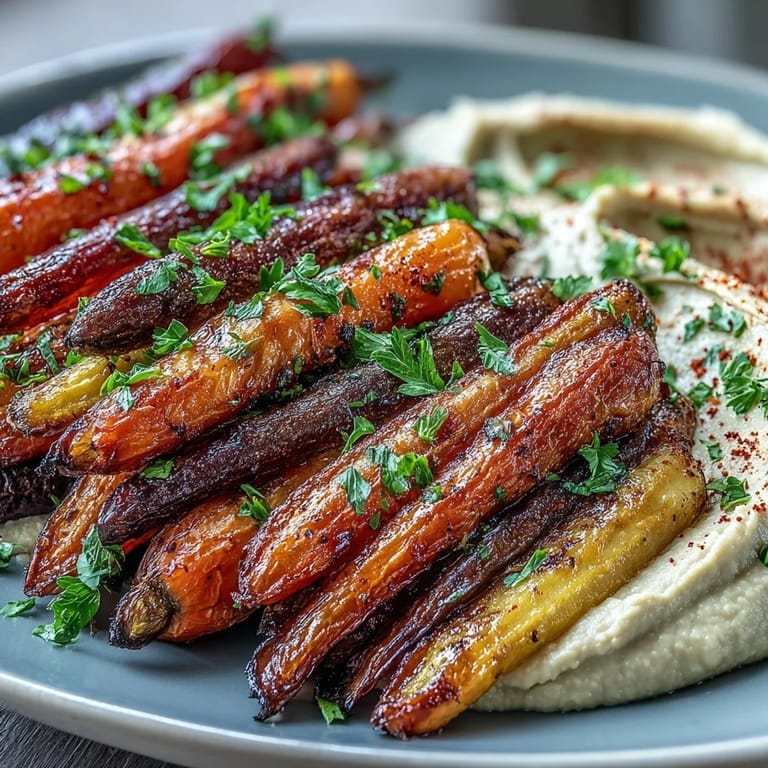
- Transfer hummus to a bowl, drizzle with a little extra-virgin olive oil, and dust with smoked paprika if you have it. Arrange the warm roasted carrots on a serving platter beside the hummus, scatter parsley on top, and let people dive in.
 Save to Pinterest
 My mom tasted this hummus and immediately asked for the recipe, which almost never happens—she's the cook in the family and usually politely says my stuff is fine. The fact that she wanted to make it herself felt like a small victory, and I realized that sometimes the simplest dishes are the ones people actually want to recreate at home.
Why Carrots Deserve Better
Roasting changes everything about carrots. They go from crunchy and slightly bitter to sweet and tender, their natural sugars concentrating in the heat until they're almost like a different vegetable altogether. The color deepens too, becoming more vivid—the purples get deeper, the oranges richer. It's one of those cooking techniques that feels like a secret once you understand it.
The Tahini Trick
Tahini is what separates restaurant-quality hummus from the grainy kind that tastes like baby food. It adds creaminess without dairy and a subtle nuttiness that works underneath the lemon and garlic. The first time I made hummus without it, I understood why people buy the expensive stuff at the store—tahini is non-negotiable, but it's also incredibly affordable if you buy it somewhere with good stock.
Building a Better Platter
The beauty of this dish is that it works as an appetizer, a side, or even a light lunch. You can make it hours ahead—the hummus actually tastes better the next day once the flavors marry—and the roasted carrots are good at room temperature or slightly warm. It travels well to potlucks and looks impressive without requiring last-minute assembly.
- Serve with pita chips, raw veggies, or crusty bread to turn this into a full snack board.
- Toast sesame seeds or make dukkah to sprinkle on top for texture and extra flavor.
- A tiny pinch of chili flakes over the hummus adds heat without overpowering the delicate tahini base.
 Save to Pinterest
 This recipe taught me that the best entertaining doesn't require complicated techniques or fancy ingredients. Sometimes it's just about choosing good things and letting them shine.
Recipe FAQs
- → What makes rainbow carrots special?
Rainbow carrots come in various colors including purple, orange, yellow, and white. Each variety offers slightly different flavor notes—from sweet to earthy—while providing a visually stunning presentation that elevates any platter.
- → Can I prepare the components ahead?
Absolutely. The hummus can be made up to three days in advance and stored in an airtight container. Roasted carrots are best served fresh but can be reheated gently at 350°F for 5-10 minutes if needed.
- → What else can I serve with this platter?
Consider adding warm pita bread, cucumber slices, bell pepper strips, or olives. Fresh herbs like mint or basil make lovely garnishes, and a drizzle of quality olive oil enhances the overall presentation.
- → How do I get the smoothest hummus texture?
The secret is blending tahini and lemon juice first until creamy, then adding chickpeas gradually. Don't forget the cold water—it helps achieve that silky restaurant-style consistency. Blend for at least 4-5 minutes.
- → Is this suitable for dietary restrictions?
This platter is naturally vegan, gluten-free, and packed with plant-based protein. It's perfect for various dietary needs when served with gluten-free crackers or vegetable crudités instead of traditional pita bread.
- → Can I substitute regular carrots?
While you can use regular orange carrots, the rainbow variety adds both visual appeal and subtle flavor differences. If unavailable, try using a mix of orange and purple carrots for similar color contrast.