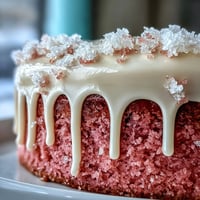
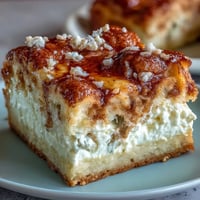
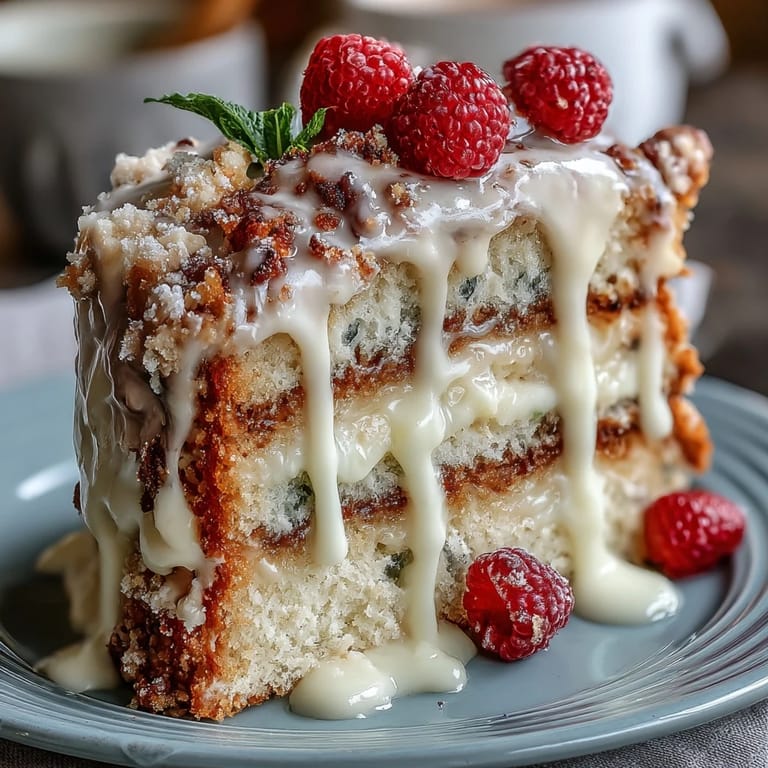
 Save to Pinterest
 My sister called me three days before her birthday asking if I could make something springy and bright—not the heavy chocolate cake she usually expects, but something that tasted like the season itself. I found myself staring at a lemon on the counter, remembering how my grandmother used to make lemon curd in a double boiler, letting it bubble away while sunlight streamed through her kitchen window. That afternoon, I decided to build an entire cake around that tangy, golden filling, layering it between tender vanilla crumb and clouds of whipped cream. The result was so good she asked me to make it again before the month was out.
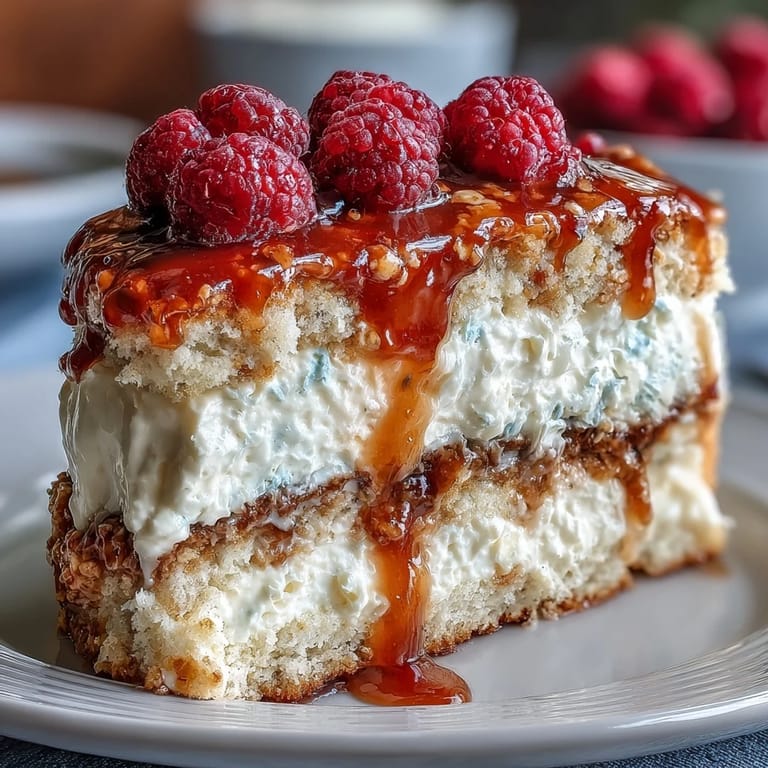
I'll never forget watching my neighbor peer into the box as I carried the finished cake to her porch—her eyes actually lit up when she saw the berries scattered across the top like tiny jewels. She said it looked almost too pretty to cut, then immediately asked for the recipe. That's when I knew I'd landed on something special, something that bridges the gap between showstopper and genuinely comforting food.
Ingredients
- All-purpose flour (2 ½ cups): The foundation of your tender crumb—measure by spooning into your measuring cup and leveling off, because scooping directly adds too much flour and makes the cake dense.
- Baking powder and baking soda (2 ½ tsp and ½ tsp): These two work together to give you lift and a slightly tender interior, not a dense brick.
- Salt (½ tsp): A pinch that makes everything taste more like itself, especially the vanilla and lemon.
- Unsalted butter (1 cup): Room temperature is non-negotiable here—cold butter won't cream properly, and you need that fluffy base for the cake to rise.
- Granulated sugar (2 cups): Creamed with the butter until it looks like pale wet sand, this creates air pockets that keep the cake tender.
- Eggs (4 large, room temperature): Cold eggs will break your emulsion and leave you with a curdled mixture that bakes up gritty instead of smooth.
- Vanilla extract (1 tbsp): The quiet backbone that deepens every flavor in the cake without announcing itself.
- Whole milk (1 cup, room temperature): Alternating with flour keeps gluten development gentle and the crumb impossibly moist.
- Lemon zest (1 lemon): Mixed into the batter so the flavor spreads throughout, not just sitting on the surface.
- Egg yolks (4): For the curd, they're what makes it thick and silky as it cooks down.
- Fresh lemon juice (⅓ cup): Use fresh lemons every time—bottled juice is thin and one-dimensional compared to the real thing.
- Lemon zest (2 lemons): Double the amount in the curd because you want it to taste bright and unapologetically lemony.
- Butter for curd (¼ cup): Whisked in at the end while the mixture is still warm, it makes the curd glossy and luxurious.
- Heavy cream (2 cups, chilled): The colder it is, the faster it whips and the better the peaks hold.
- Powdered sugar (½ cup): Sifted before whipping prevents lumps and dissolves faster than granulated would.
- Vanilla extract for frosting (1 tsp): A smaller amount here so it doesn't overpower the delicate whipped cream.
- Fresh berries and edible flowers: Optional but honestly worth it—they turn a beautiful cake into something that feels like a gift.
Tired of Takeout? 🥡
Get 10 meals you can make faster than delivery arrives. Seriously.
One email. No spam. Unsubscribe anytime.
Instructions
- Set the stage:
- Preheat your oven to 350°F and grease your sheet pan with softened butter before lining it with parchment paper—the butter helps the parchment stick and stay smooth. Let your eggs and milk sit on the counter for at least 20 minutes so they're truly room temperature, which helps them blend seamlessly into the batter.
- Build the dry mixture:
- In a medium bowl, whisk together flour, baking powder, baking soda, and salt, breaking up any lumps in the baking soda with the back of your whisk. This distributes the leavening evenly so you don't end up with strange bumps or underbaked pockets.
- Cream the butter and sugar:
- Beat softened butter and sugar together for 3 to 4 minutes until the mixture looks pale, fluffy, and slightly grainy, like damp sand. This process incorporates air into the fat, which becomes the structure of your cake—skip this and you'll taste the difference immediately.
- Add the eggs:
- Drop one egg in at a time, beating well after each addition until it's completely incorporated and the mixture looks smooth again. If you dump all four in at once, they won't emulsify properly and your batter will look curdled and broken.
- Fold in vanilla and zest:
- Mix in the vanilla extract and lemon zest, stirring just until you don't see any white streaks of vanilla. The zest has already released its oils into the butter, so you're just distributing it evenly through the cream.
- Alternate wet and dry:
- Add the flour mixture in three additions, alternating with the milk and always beginning and ending with flour—this keeps the batter tender and prevents overmixing. Stir until just combined after each addition, stopping the moment you don't see streaks of flour anymore.
- Bake the cake:
- Pour the batter into your prepared pan and smooth the top gently with an offset spatula. Bake for 28 to 32 minutes until a toothpick inserted in the center comes out clean with maybe one or two crumbs clinging to it, then let it cool completely in the pan on a wire rack.
- Make the lemon curd while the cake cools:
- Whisk together egg yolks, sugar, lemon juice, and zest in a small saucepan, then cook over medium-low heat while stirring constantly—you're looking for the mixture to thicken and reach about 165°F on a thermometer, which takes 5 to 7 minutes. Remove from heat and whisk in the cubed butter until the curd is glossy and smooth, then press plastic wrap directly onto the surface and refrigerate until completely cold.
- Whip the cream:
- Pour cold heavy cream into a chilled bowl, add powdered sugar and vanilla, and beat with an electric mixer until stiff peaks form—this takes about 2 to 3 minutes if your cream was properly cold. Overbeating turns it grainy, so watch carefully and stop the moment you see stiff peaks.
- Assemble the cake:
- Once the cake is completely cool, run a thin serrated knife horizontally through the middle to create two equal layers, working slowly and rotating the pan as you go. Carefully lift off the top layer, spread the chilled lemon curd evenly over the bottom layer, then replace the top layer gently so it settles into place.
- Frost and decorate:
- Spread the whipped cream frosting evenly over the top and sides of the cake using an offset spatula, creating gentle swirls if you'd like. Scatter fresh berries, edible flowers, or curls of lemon zest over the top, and chill the assembled cake for at least 1 hour before slicing so it holds its shape beautifully.
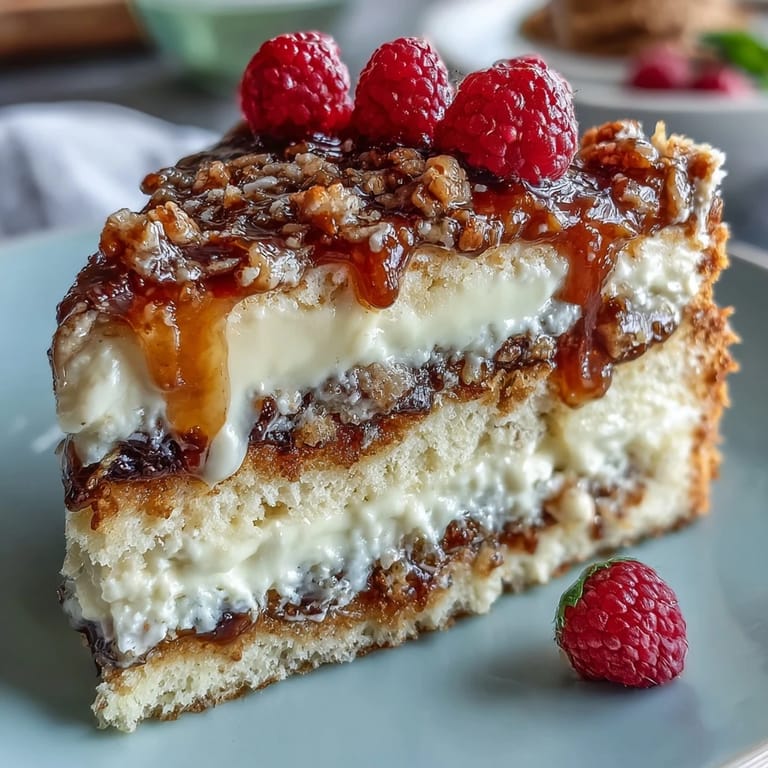 Save to Pinterest
 My mom called me the morning after my sister's party to say everyone had asked for leftovers and did I have enough cake to send home with people. I realized then that this cake had become the kind of thing that lingers in people's minds, not just on their plate but in their memory of the day. That's when I knew I'd created something worth making again and again.
Why Room Temperature Matters
I learned this the hard way one morning when I forgot to take my eggs out of the fridge and thought it wouldn't matter. It absolutely mattered—the batter looked separated and grainy, the cake came out dense, and I threw the whole thing away feeling defeated. Room temperature ingredients blend together like they belong in the same batter, creating an emulsion that's smooth and lofty. Cold ingredients, especially eggs and milk, fight against the butter and sugar, breaking the emulsion and leaving you with a cake that bakes up heavy and tight. Letting everything sit on the counter for 20 to 30 minutes before you start is the simplest thing you can do to guarantee success.
The Importance of Chilling Before Serving
The first time I tried to slice this cake straight after assembly, it fell apart like I was cutting through wet sand—the whipped cream squished sideways and the layers slid around. Chilling for at least an hour gives everything time to set and hold together, and it makes slicing clean and almost elegant. I now use a hot, damp knife wiped between each slice, and the cake comes out looking almost professional instead of tragic. The cold also enhances the flavor because cold ingredients taste less sweet and more bright, so the lemon really shines through. It's worth the wait, I promise.
Making It Your Own
Once you understand how this cake works, you can play with it endlessly while keeping the structure intact. I've made it with lime instead of lemon, with a hint of rose water in the whipped cream, and once with fresh mint scattered between the layers on a whim. The vanilla cake is sturdy enough to hold whatever you want to pair with it, as long as you keep the ratios and temperatures in mind. My favorite variation is brushing the layers with a simple lemon syrup before assembly—just squeeze fresh lemon juice, mix with a little sugar, and brush it on while the cake is still slightly warm so it soaks in and adds moisture.
- Keep the curd cold and the cream cold, and everything else will follow.
- A serrated knife dipped in hot water between slices keeps the frosting from tearing and smudging.
- This cake is actually better the day after assembly because all the flavors have time to meld together.
 Save to Pinterest
 This cake has become my go-to for celebrations because it tastes like spring and generosity all at once. Make it once, and you'll understand why people keep asking for it.
Recipe FAQs
- → How can I ensure the cake layers stay moist?
Use room temperature ingredients and avoid overmixing. Adding zest and preserving moisture by layering lemon curd helps retain softness.
- → What is the best method to slice the cake cleanly?
Chill the assembled cake well and use a serrated knife to make smooth, even slices without crumbling.
- → Can I prepare the lemon curd in advance?
Yes, lemon curd can be made a day ahead and refrigerated, allowing flavors to deepen before assembling.
- → What alternatives can be used for decoration?
Fresh berries, edible flowers, or citrus zest curls enhance both appearance and flavor without overpowering the cake.
- → How should the whipped cream frosting be stored before use?
Keep the frosting chilled and whip it just before applying to maintain volume and texture.
- → Is it possible to use store-bought lemon curd?
Yes, store-bought lemon curd can save time and still deliver tangy flavor when layered between cake.