 Save to Pinterest
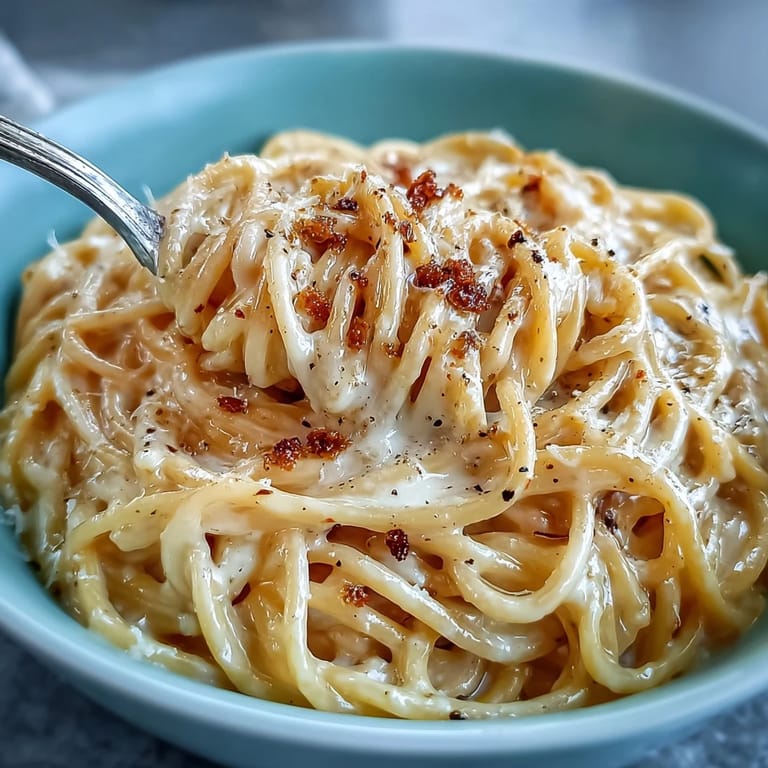
 Cacio e Pepe is a classic Roman pasta dish that celebrates the bold flavors of Pecorino Romano cheese and freshly cracked black pepper. This dish delivers maximum taste with minimal ingredients, proving that simple components can create a truly sophisticated meal.
Save to Pinterest This vegetarian-friendly main dish is a staple of Roman cuisine, relying on the heat of the pepper and the sharp, salty tang of the Pecorino to create a sauce that is both rich and vibrant.
Ingredients
Tired of Takeout? 🥡
Get 10 meals you can make faster than delivery arrives. Seriously.
One email. No spam. Unsubscribe anytime.
- Pasta: 400 g (14 oz) spaghetti or tonnarelli
- Cheese: 120 g (4.2 oz) Pecorino Romano cheese, finely grated
- Seasonings: 2 tsp whole black peppercorns (freshly cracked) and 1 tsp kosher salt (for pasta water)
- Optional: 1 tbsp unsalted butter (for extra creaminess)
Instructions
- Step 1: Boil the Pasta
- Bring a large pot of water to a boil. Add salt, then cook the spaghetti until just al dente (about 1 minute less than package instructions). Reserve 1½ cups (350 ml) of pasta cooking water before draining.
- Step 2: Toast the Pepper
- While the pasta cooks, toast the freshly cracked black pepper in a large, dry skillet over medium heat for about 1 minute, until fragrant.
- Step 3: Prepare the Base
- Add 1 cup (240 ml) of reserved hot pasta water to the skillet with the pepper. Reduce heat to low.
- Step 4: Emulsify
- Add the drained pasta to the skillet and toss to coat, allowing the pasta to absorb some peppery water.
- Step 5: Add the Cheese
- Remove the skillet from the heat. Gradually sprinkle in the Pecorino Romano, tossing and stirring vigorously with tongs or a pasta fork to create a creamy sauce. Add more reserved pasta water, a splash at a time, if the sauce is too thick.
- Step 6: Finish
- If desired, add butter and toss until melted and emulsified.
- Step 7: Serve
- Serve immediately, topped with extra Pecorino Romano and more cracked black pepper.
Zusatztipps für die Zubereitung
For the best results, use a cheese grater to finely grate the Pecorino Romano yourself; pre-shredded cheese often contains agents that prevent it from melting smoothly into a sauce. Using a large skillet and tongs is essential for the vigorous tossing required to create the signature emulsion.
Varianten und Anpassungen
While spaghetti is a popular choice, tonnarelli is the traditional pasta used in Rome. If you find the sauce difficult to bind, adding the optional tablespoon of unsalted butter can help create extra creaminess, though traditionalists may prefer to omit it.
Serviervorschläge
Serve this dish immediately while the sauce is at its creamiest. It pairs beautifully with a crisp Italian white wine like Frascati, which helps balance the richness of the cheese and the spice of the peppercorns.
 Save to Pinterest
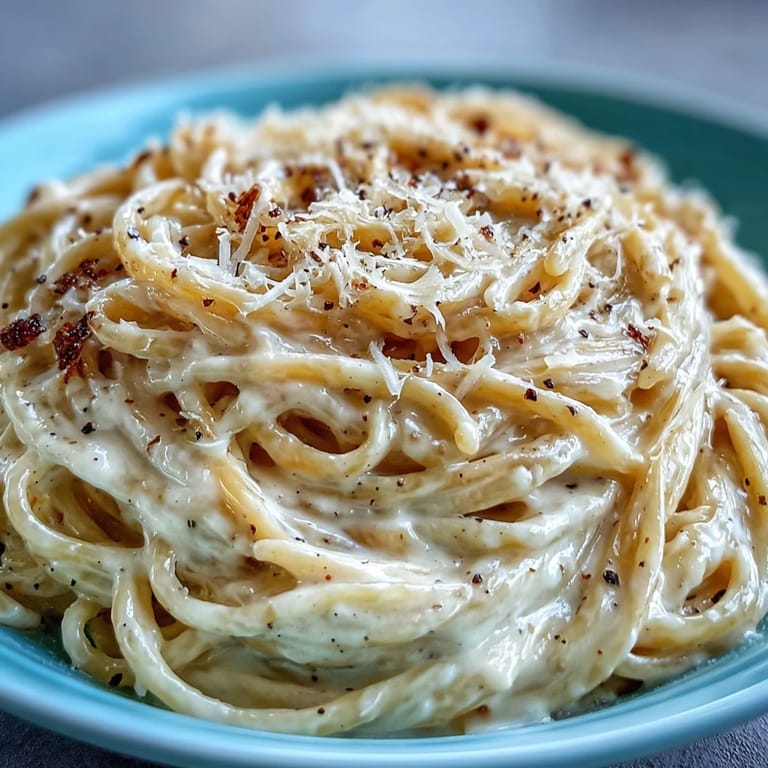
 With 18g of protein per serving and a cooking time of only 15 minutes, this Cacio e Pepe is a fast, delicious, and authentic way to enjoy one of Italy's most beloved pasta dishes.
Recipe FAQs
- → Why is fresh Pecorino Romano important for Cacio e Pepe?
Freshly grated Pecorino Romano is crucial because pre-shredded varieties often contain anti-caking agents that prevent them from melting smoothly into a creamy sauce. Using a block of high-quality cheese ensures the best texture and authentic flavor.
- → Can I use a different type of pasta for this dish?
While tonnarelli is traditional, spaghetti is a common and excellent substitute due to its similar shape and texture. The key is to choose a pasta that can hold the sauce well. Long, thin pasta strands work best.
- → How do I prevent the Cacio e Pepe sauce from clumping or becoming grainy?
The secret to a smooth sauce lies in removing the skillet from the heat before adding the cheese and gradually incorporating it while vigorously tossing. The residual heat from the pasta and the starchy pasta water emulsifies the cheese. Adding the cheese off the heat prevents it from seizing.
- → Is the butter optional, and what does it contribute?
Traditionally, Cacio e Pepe does not include butter. However, a small amount can be added at the end to enhance creaminess and richness, especially if you're struggling to achieve a smooth emulsion with just cheese and pasta water. It's a matter of preference.
- → Why is it recommended to toast the black peppercorns?
Toasting the freshly cracked black peppercorns in a dry skillet brings out their aromatic oils and deepens their flavor, adding a more complex and intense peppery kick to the dish compared to using untoasted pepper.
- → Can Cacio e Pepe be made ahead of time?
Cacio e Pepe is best enjoyed immediately after preparation. The sauce can become thick and clumpy as it cools, and reheating can compromise its creamy texture. It's designed for instant gratification and maximum freshness.