 Save to Pinterest
 The idea of roasting a whole duck used to intimidate me completely. Something about the fat rendering, the timing, the possibility of ending up with rubbery skin, it all seemed like too much pressure for a Tuesday dinner. Then one winter evening, after watching an old cooking show where the chef calmly explained that duck is actually more forgiving than chicken, I decided to just go for it. That first attempt wasnt perfect, but the aroma that filled my apartment was something I'd never experienced before, warm, spicy, and impossibly comforting. Now, whenever I really want to impress someone without spending hours at the stove, this is the recipe I turn to.
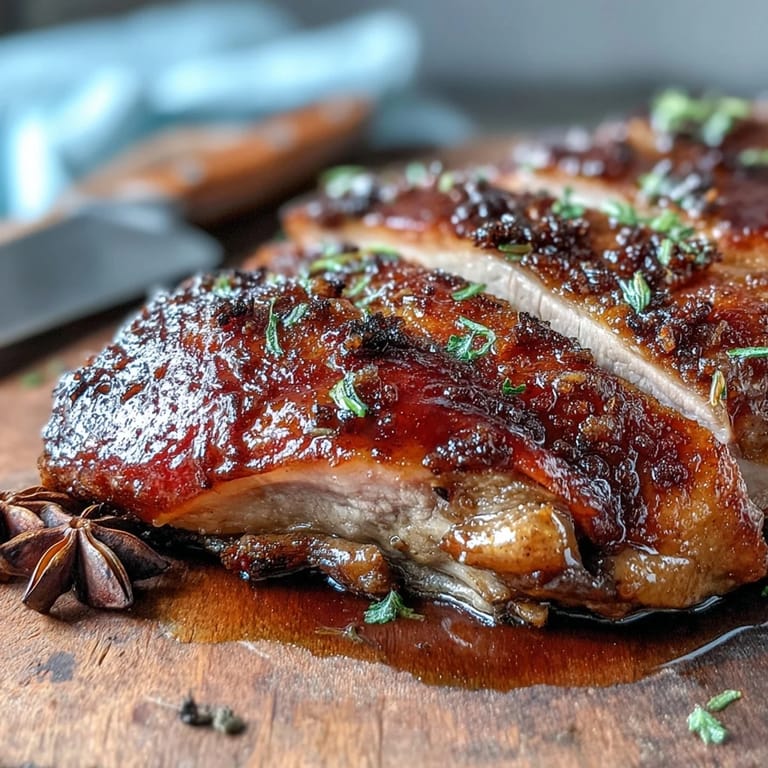
I made this for Valentine's Day last year, slightly terrified because I'd invited someone over who actually knew good food. The kitchen smelled amazing while it roasted, that combination of star anise and orange working its way through every room. When I pulled it out of the oven, the skin was burnished and glossy, exactly like the photos I'd obsessed over. We ate it standing up at the kitchen counter because I was too excited to bother setting the table properly. He took one bite, closed his eyes for a second, and said I could make this for every future date. That's when I knew this recipe was a permanent fixture in my rotation.
Ingredients
- 1 whole duck: Going for 1.5 to 2 kg gives you the best ratio of crispy skin to tender meat, and patting it completely dry is the secret to getting that skin you can actually hear crunch when you bite into it
- 2 tbsp Chinese five-spice powder: This blend of star anise, cloves, cinnamon, Sichuan pepper, and fennel is what makes the whole house smell like magic, so buy fresh if your jar has been sitting around for years
- 1 tsp sea salt: Fine table salt works too, but sea salt gives you these little bursts of salinity that balance the honey and sweet spices perfectly
- 1 tbsp light soy sauce: Use the gluten-free version if you need to, but don't skip it, that umami depth is what keeps the duck from tasting one-dimensional
- 1 tbsp dark soy sauce: This is mostly for that gorgeous mahogany color it gives the skin, plus a slightly deeper, caramel-like flavor
- 2 tbsp honey: The sugar helps with crisping and gives you that gorgeous glazed finish, but maple syrup works if that's what you have
- 2 tbsp Shaoxing wine: Dry sherry is a perfectly fine substitute, but the Chinese rice wine adds this subtle fermented complexity that ties everything together
- 4 cloves garlic: Minced as finely as you can manage, you want those little bits of garlic to caramelize and get sweet in the oven
- 2-inch piece fresh ginger: Grated on a microplane if you have one, or just minced very small, fresh ginger has this bright heat that powdered ginger just can't replicate
- 1 orange: You need both zest and juice for the marinade, plus a second orange quartered for inside the cavity, that citrus cutting through the rich fat is what makes each bite balanced
- 2 spring onions: These go inside the duck to infuse the meat from within while everything roasts
- 4 star anise pods: Tucked into the cavity, they keep releasing their licorice perfume throughout the entire roasting time
Tired of Takeout? 🥡
Get 10 meals you can make faster than delivery arrives. Seriously.
One email. No spam. Unsubscribe anytime.
Instructions
- Make the marinade:
- Whisk together the five-spice, salt, both soy sauces, honey, Shaoxing wine, garlic, ginger, orange zest, and juice in a small bowl until the honey dissolves completely. You want this mixture to be thick enough to cling to the duck but thin enough to spread easily.
- Prep the duck:
- Place your duck on a rack in a roasting pan, then use a fork to prick the skin all over, being really careful not to pierce through to the meat underneath, this is crucial for rendering fat without drying out the meat.
- Season thoroughly:
- Rub that marinade everywhere, over every inch of skin and inside the cavity too, getting into all the nooks and crannies where flavor likes to hide.
- Stuff and rest:
- Fill the cavity with the quartered orange, spring onions, and star anise, then let everything hang out uncovered in the fridge for at least an hour, or honestly, overnight if you're planning ahead.
- Start roasting:
- Heat your oven to 180°C with the rack in the middle position, then slide the duck in breast-side up and let it roast for a full hour, basting with those pan juices every 30 minutes.
- Crisp it up:
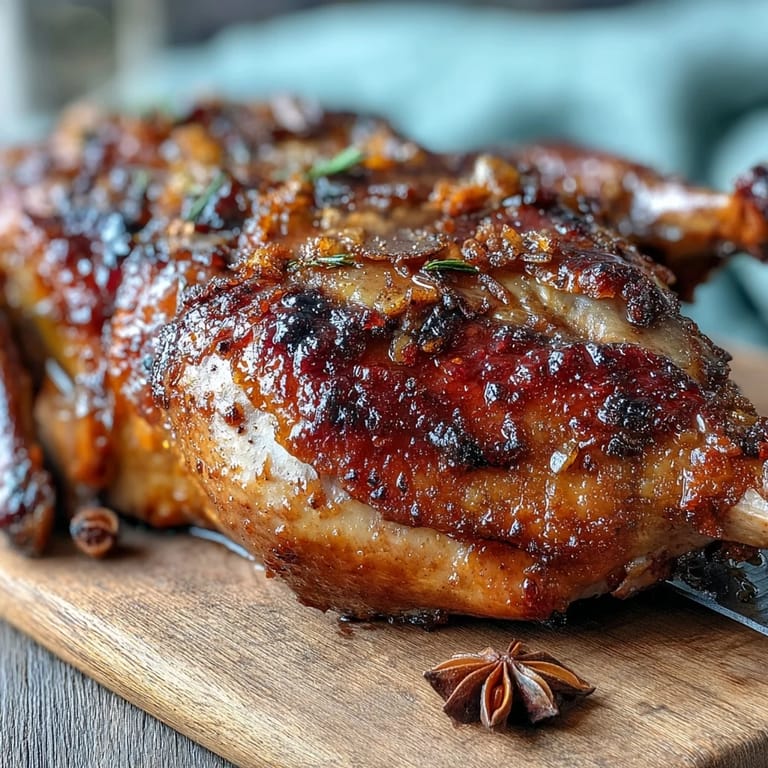
- Crank the heat to 220°C and give it another 20 to 30 minutes, watching closely until the skin turns this incredible deep golden brown and you can practically hear it crisping.
- Rest before serving:
- Let the duck rest on a cutting board for 10 minutes, which feels like forever when you're hungry but makes a huge difference in how juicy the meat stays.
 Save to Pinterest
 My roommate walked in while this was resting on the counter and immediately asked if we were having takeout from someplace expensive. When I told her I'd made it myself, she looked at me like I'd revealed a superpower. We ate it with just steamed rice and some quick greens, nothing fancy, but the way the crispy skin cracked between our teeth and how the spices had worked their way into every bite of meat, it felt like something special. Now whenever I need a reminder that I'm actually capable of pulling off impressive things in the kitchen, I make this recipe.
Getting That Skin Perfect
The difference between good duck skin and great duck skin comes down to patience and temperature control. I've learned that rushing the final crisping step results in patchy, tough spots instead of that uniform glassy crunch. Letting the duck come to room temperature for about 20 minutes before it goes into the oven helps everything cook more evenly too. And when you're basting, tilt the pan so you can spoon up those rendered fat and juices, getting every bit of flavor back onto the bird.
Making It Your Own
Sometimes I'll add a teaspoon of Sichuan peppercorns to the marinade when I want that extra numbing buzz. Other times, especially in summer, I swap the orange for blood orange or even grapefruit for a slightly different citrus note. The honey can be replaced with maple syrup for a darker, more complex sweetness that pairs beautifully with the five-spice. Once you make it a few times, you'll start sensing what balance your tastes prefer.
Serving & Pairing Ideas
This duck demands sides that can stand up to its intensity without competing. Steamed jasmine rice is classic for a reason, that subtle floral perfume is the perfect canvas. Blanched bok choy with just a drizzle of sesame oil works beautifully, or stir-fried long beans with garlic. For wine, a light Pinot Noir has enough fruit to complement the spices without being overwhelmed, or chilled jasmine tea if you want to keep it traditional and refreshing.
- Carve against the grain for the most tender slices
- Save the rendered fat, it's liquid gold for roasting potatoes later
- Any leftovers reheat beautifully in a hot pan to recrisp the skin
 Save to Pinterest
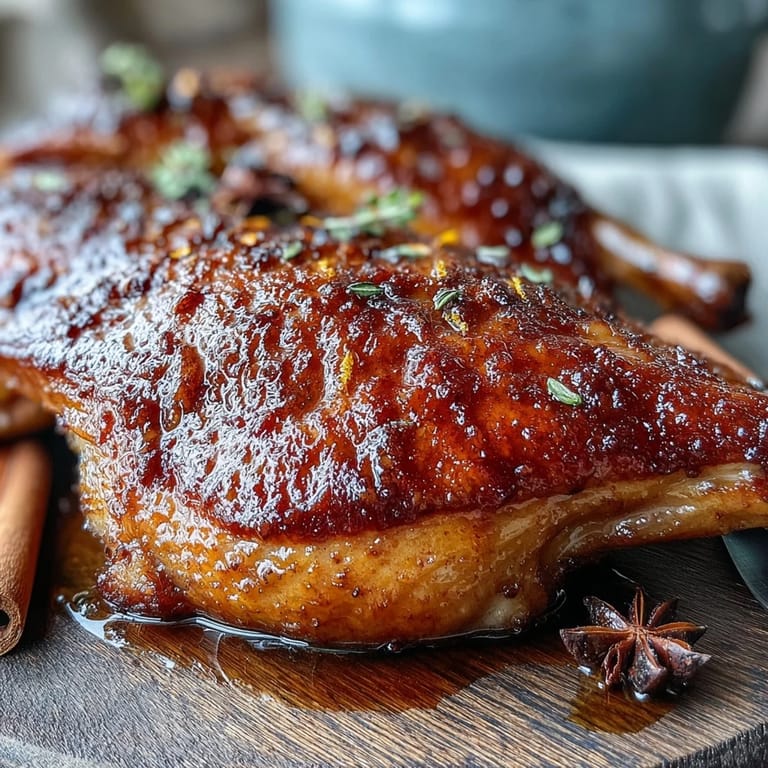
 There's something deeply satisfying about serving a whole roasted bird, it feels like an occasion even on a random Tuesday. The way the kitchen smells, the anticipation while it rests, that first impossible crispy bite, it's kitchen magic that never gets old.
Recipe FAQs
- → How long should I marinate the duck for the best flavor?
For the deepest infusion of flavor, allow the duck to marinate, uncovered in the refrigerator, for at least 1 hour. For an even more profound taste, marinating overnight is highly recommended.
- → What's the secret to achieving crispy duck skin?
Several steps contribute to crispy skin: pricking the skin all over before marinating helps render fat, leaving the duck uncovered in the fridge overnight dries out the skin, and finishing the roast at a higher temperature (220°C/425°F) for the last 20-30 minutes is crucial.
- → Can I make this dish gluten-free?
Yes, ensure you use gluten-free light and dark soy sauces. Always check ingredient labels carefully for any hidden gluten-containing ingredients.
- → What should I serve alongside the roasted duck?
This aromatic duck pairs beautifully with steamed jasmine rice and a side of stir-fried greens. A light Pinot Noir or chilled jasmine tea also complements the flavors well.
- → Why is it important to rest the duck after roasting?
Resting the duck for at least 10 minutes after removing it from the oven allows the juices to redistribute throughout the meat, ensuring it remains tender, moist, and succulent when carved.