 Save to Pinterest
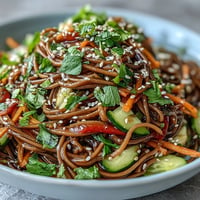
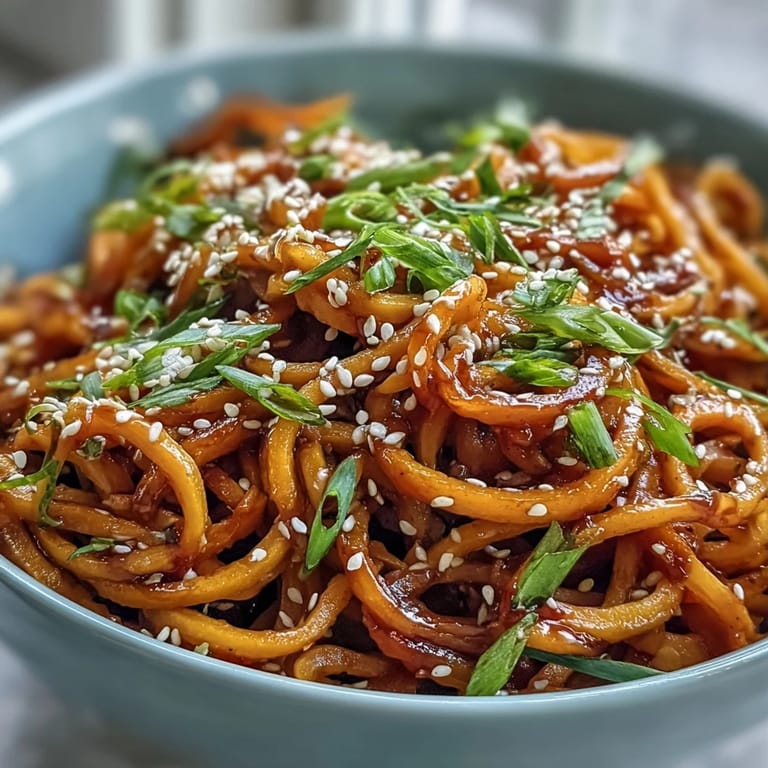
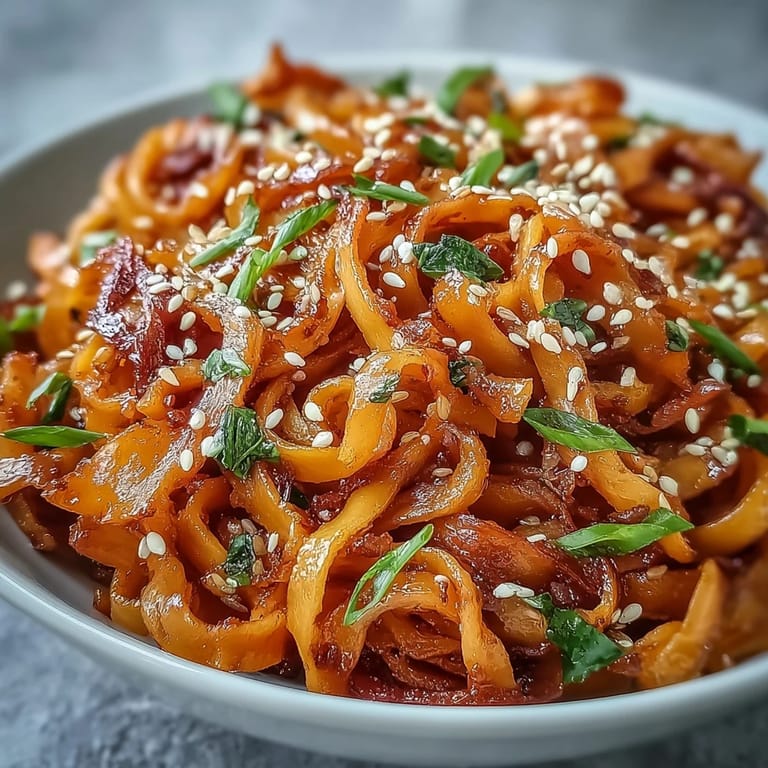
 This Gochujang Swede Noodles recipe brings a bold, Korean-inspired twist to a humble root vegetable. By transforming swede into golden, roasted ribbons, we create a dish that is as visually stunning as it is delicious, perfectly balanced with sweet, salty, and spicy notes.
Save to Pinterest The magic of this dish lies in the glossy gochujang dressing that coats every ribbon and noodle. The earthy sweetness of the roasted swede complements the fermented heat of the chili paste, making every bite a complex flavor experience.
Ingredients
Tired of Takeout? 🥡
Get 10 meals you can make faster than delivery arrives. Seriously.
One email. No spam. Unsubscribe anytime.
- Vegetables: 1 large swede (rutabaga), peeled and cut into thin ribbons or julienne; 2 spring onions, thinly sliced; 1 small carrot, julienned (optional); 1 cup bean sprouts (optional); 1 tbsp sesame seeds, toasted; fresh cilantro or coriander, for garnish.
- Noodles: 250 g dried rice noodles.
- Gochujang Dressing: 3 tbsp gochujang (Korean chili paste), 1 ½ tbsp soy sauce, 2 tbsp maple syrup or honey, 1 tbsp rice vinegar, 1 tbsp toasted sesame oil, 1 clove garlic, finely grated, 1 tsp fresh ginger, grated, ½ tsp chili flakes (optional), 2 tbsp water.
- For Roasting: 2 tbsp vegetable oil, ½ tsp salt, ¼ tsp black pepper.
Instructions
- Step 1
- Preheat your oven to 220°C (425°F).
- Step 2
- Toss the swede ribbons with vegetable oil, salt, and pepper. Spread them evenly on a baking sheet and roast for 25–30 minutes, turning halfway through, until they are golden and tender.
- Step 3
- While the swede roasts, cook the rice noodles according to the package instructions. Drain them, rinse with cold water, and set aside.
- Step 4
- In a small bowl, whisk together the gochujang, soy sauce, maple syrup or honey, rice vinegar, sesame oil, garlic, ginger, and chili flakes. Add water as needed to reach a pourable consistency.
- Step 5
- In a large mixing bowl, combine the roasted swede, cooked noodles, spring onions, carrot, and bean sprouts. Pour the gochujang dressing over the top and toss until everything is well coated.
- Step 6
- Serve the noodles immediately, garnished with toasted sesame seeds and fresh cilantro.
Zusatztipps für die Zubereitung
To achieve the perfect ribbon shape, use a vegetable peeler or a mandoline. This ensures the swede is thin enough to roast quickly and mimic the texture of the rice noodles. Using a large pot to cook the noodles will prevent them from clumping.
Varianten und Anpassungen
For a gluten-free version, simply use tamari instead of soy sauce and ensure your gochujang paste is certified gluten-free. If you want to add more protein, consider tossing in some pan-fried tofu or edamame beans.
Serviervorschläge
This spicy and sweet dish pairs excellently with a crisp, aromatic white wine such as a Riesling. If you prefer beer, a light lager is a refreshing choice that helps balance the heat of the gochujang.
 Save to Pinterest
 With its vibrant colors and deep umami flavors, these Gochujang Swede Noodles are sure to become a favorite for anyone seeking a healthy yet hearty plant-based meal. Enjoy the perfect fusion of Korean spice and roasted goodness.
Recipe FAQs
- → What is swede and how is it prepared for this dish?
Swede, also known as rutabaga, is a root vegetable. For this creation, it's peeled and cut into thin ribbons, then roasted until tender and golden.
- → Can I adjust the spice level of the gochujang dressing?
Absolutely. Gochujang itself provides a moderate heat. You can increase or decrease the chili flakes according to your preference for a milder or spicier flavor profile.
- → Is this a suitable option for those with dietary restrictions?
Yes, this offering is naturally vegan and dairy-free. For a gluten-free version, simply substitute tamari for soy sauce and ensure your gochujang is certified gluten-free.
- → What if I don't have all the fresh vegetables listed?
The spring onions, carrot, and bean sprouts add freshness and crunch. While recommended, you can easily omit or substitute with other suitable fresh produce you have on hand, such as bell peppers or cucumber.
- → How can I add more protein to this meal?
To boost the protein content, consider adding pan-fried tofu, tempeh, or edamame. These additions complement the flavors beautifully and create a more substantial offering.